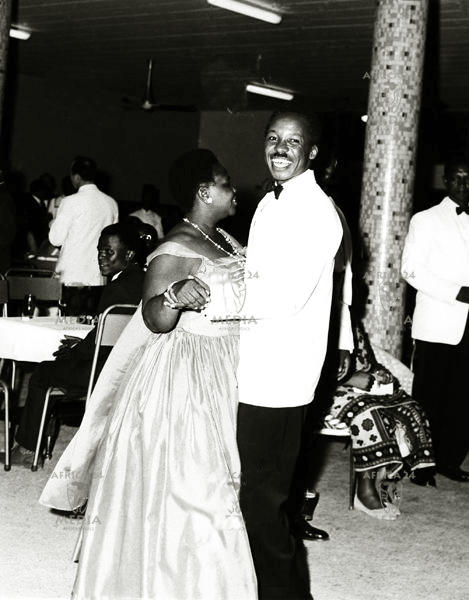
It was the year 1972. I was a student at Iringa Teachers’ College, now known as Klerruu Teachers’ College. I was with my roommate and fellow guitarist, Yusuph Mdee, the uncle of the famous singer Vanessa Mdee. We had received information that the STC Jazz Band had arrived in Iringa and the musicians were lodging at the Kilimanjaro guest house, which was near the Tivoli cinema hall. We had our own college band and were excited to meet our more famous comrades. Yusuph was already acquainted with one of the band’s musicians, Raphael Sabuni, whom they had met in Arusha sometime before. We found the musicians sitting outside the guest house; they had a small record player in front of them, and they had just bought a new 45 record by the famous Congolese band, Vox Africa, led by the maestro Jeannot Bombenga. I even remember the song they were listening to, it was titled “Magui.” That was when I met Marijani Rajabu for the first time; he was a slim young man who had not yet attained any fame. While listening to that song, I recall Marijani asking us all, “When will we ever learn to sing this well?” I believe he came to surpass that level.
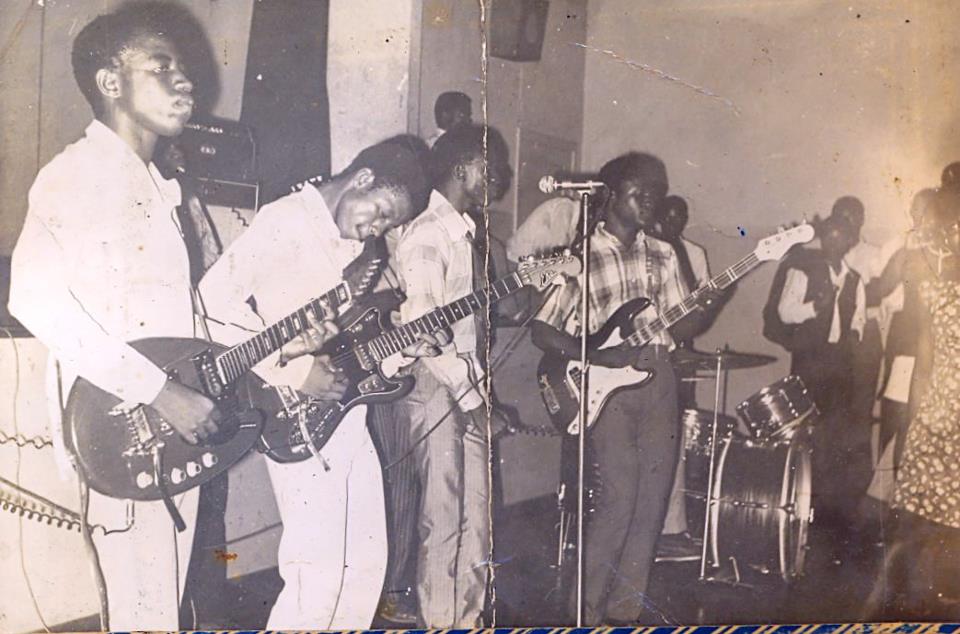
The Jets
The STC Jazz Band came to perform several shows in Iringa, upon the invitation of the Iringa branch of the State Trading Corporation (STC). STC was a public corporation that had stores in almost every region nationwide. These stores distributed goods wholesale or retail as part of the government’s effort at that time to distribute products and sell them at fair prices to its citizens in line with the Ujamaa policy.
That evening, we sneaked out of college to go listen to the STC Jazz Band, which was performing at the Welfare Centre in the Kitanzini area. That is where I first heard Marijani Rajabu sing, performing the band’s hit songs, including Shida, STC Tuko Hapa (STC is here) and Ilikuwa Usiku wa Manane (It was late at night). But because I was then a budding guitarist, I was following closely what the lead guitarist Raphael Sabuni was doing. To date, I still remember the white trousers he was wearing and the colour of his guitar, an Egmond guitar with a dark red body with a white spot. At the time, I was in a phase of enjoying “Western” songs. Now, the STC Jazz Band, before entering a contract with the State Trading Corporation, was called The Jets and was very skilled at playing Western songs. That night, they played many of the songs that I loved. STC Jazz Band played songs like “Direct Me” by Otis Redding, Hey Joe of Jimi Hendrix Experience, and I was ecstatic. In those years, soul music from America was the favourite music for many urban teenagers at the time. STC Jazz Band even had their own Zaramo soul song, Muleme Muleme, a song asking a woman to leave her boyfriend and the singer would buy her Khanga cloth. We returned to college with my friend, very very satisfied with the night’s entertainment, the very next morning we stared rehearsing some of the songs we heard STC Jazz Band perform.
In the following years, we met Marijani many times and became acquainted, especially when I was a musician with the TANCUT Almasi Orchestra of Iringa. Whenever we went to Dar es Salaam, we had a custom of having a show at the Omax Bar hall in the Keko area. When we played in this hall, Marijani would always attend, and his special song was Masikitiko, a song composed by the late Kyanga Songa. The lyrics were about a woman who said she had everything, beauty, wealth, but no man approached her. I played the rhythm guitar in that song; I think it was because this song had Manyema beats, and Marijani was a Manyema by tribe, he would stand up and approach the band when we performed the song.
The last time I met Marijani was at the end of 1994. I met him outside his home in the Gerezani neighborhood. At that time, I was also the Chairman of the Tanzanian Dance Music Association (CHAMUDATA). Marijani had a small shop where he sold cassettes of his songs. We talked a lot about the music business and discussed the problem of the National Radio selling tapes of Tanzanian bands’ songs without giving a share of the sales to the song owners. We never met again, and a few months later, Marijani Rajabu passed away.
Marijani Rajabu died on March 23, 1995, and was buried the next day, March 24, at the Kisutu cemetery in Dar es Salaam.
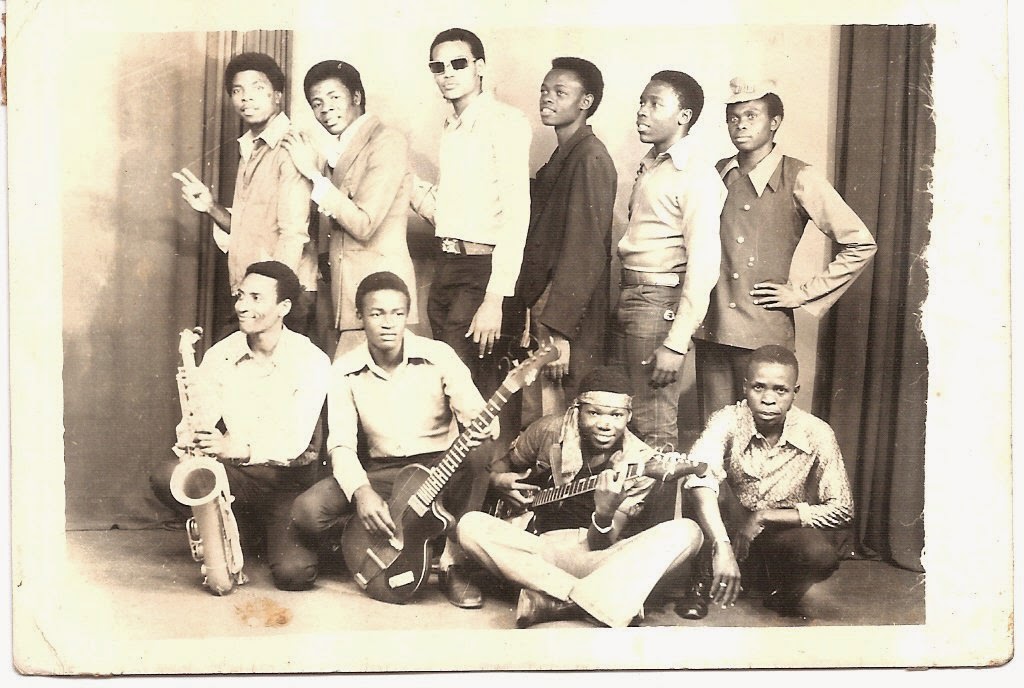
The Safari Trippers
Marijani started music while still a very young boy, and even when I met him in Iringa with the STC band, he was still a teenage secondary school student. This situation caused problems for the STC Jazz Band, which was owned by a public corporation. It was accused of employing a schoolboy who had started missing school because of music, so he had to leave the band. The turmoil with STC Jazz Band led him to move to The Trippers band, which was owned and run by David Mussa. David was a multi-instrumentalist who was, at the time, also a bank employee. The Trippers Band mostly performed cover songs.
Marijani’s entry brought a complete revolution within the band and its music. The Trippers added the word “Safari” to its name and began to be called Safari Trippers. The band started to compose and play its own songs. Marijani participated in composing or singing almost all of the Trippers’ songs, in addition to playing guitar on some of them. An example is the song Olila, where he played rhythm and sang. In 1976, Marijani and some other Safari Trippers musicians decided to leave the band and went on to establish another great band the Dar es Salaam International Orchestra, which was under the ownership of Mzee Zakaria Ndabemeye. Some of these musicians included Abel Baltazar from JUWATA Jazz Band, Kassimu Mponda from Safari Trippers, Abdallah Gama, Joseph Mulenga, Haruna Lwali, and George Kessy Omojo, who were members music in the Tanzania Stars band, a resident band at the notorious Margot hall. Together with other musicians like Said Mohamed from Polisi Jazz, Cosmas Chidumule from Urafiki, Belesa Kakere from Biashara Jazz, Joseph Bernard, Ali Rajabu also from Trippers, and King Michael Enock from Dar es Salaam Jazz Band, they formed a fantastic band.
After a number of successful hits, a clash of ideas between Marijani and Abel Balthazar who was the band leader, led to Marijani being suspended from the band.
In the second quarter of 1978, Marijani was recalled by the band owner, following a mass exodus of Dar International Orchestra musicians who were led by Abel Balthazar, who went on to form Mlimani Park Orchestra.
Marijani rebuilt the Dar es Salaam International Orchestra, with many new musicians at that time, such as Christopher Kasongo, Mohamed Tungwa, Mafumu Bilal, Hamis Milambo, Athuman Momba, Alex Kanyimbo, and others, and introduced the “Super Bomboka” style. Musicians who were there at the time narrate that Marijani composed a song mocking Abel Barthazar; the song was named “Kidudu Mtu,” but the RTD censorship committee refused to record it due to the song’s moral content.
Marijani was also known for nurturing budding musicians. In 1983, he discovered from Tanga a young man named Mkuu Waziri Kungugu Kitanda Milima, famously known as Fresh Jumbe. Marijani certainly never regretted taking on this young man. He trusted him beyond description to the extent that sometimes he would let him lead the band while he rested at home. Besides Fresh, other musicians discovered by Marijani include Tino Masinge, Mohamed Mwinyikondo, Juma Choka, and many others. The journey of Dar International ended in 1987 due to the deterioration of the instruments. However, Marijani continued making music and, for a short period, was the director of Kurugenzi Arusha Jazz Band. Later, he moved to the Mwenge Jazz Band, a veteran band owned by the Tanzania People’s Defence Force, where he recorded one song about AIDS. For a short while, he was a member of the Watafiti, which eventually became the group Tatunane. He did record some songs with the Watafiti. In his final days, he had the group Africulture Band, which performed the ‘Mahepe ngoma ya wajanja’ style.
In 1987, Marijani Rajabu and Muhidin Maalim Gurumo led a group of more than 50 musicians to compose special songs, especially for the celebrations of 10 years of CCM and 20 years of the Arusha Declaration. This group, which had very skilled musicians, was called Tanzania All Stars. In my opinion the standard of music recorded by this group has never been surpassed. Marijani’s last recording could be the songs he recorded with another great vocalist, the late Eddy Sheggy.
Marijani’s songs are still being performed by many Tanzanian groups even today. May his soul rest in eternal peace.