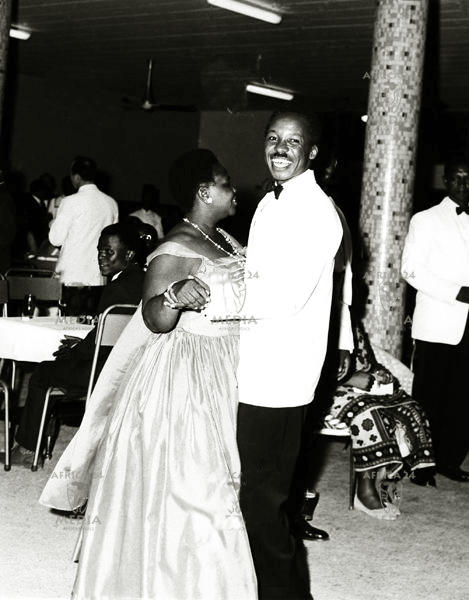
It has been 65 years since Tanganyika gained its Independence. The country has now gone through 6 phases of top government leadership. I have been fortunate to be a musician in all these phases. Today, allow me to tell you what it was like to be a musician in the glory days of the first phase, the era of Mwalimu Julius Kambarage Nyerere.
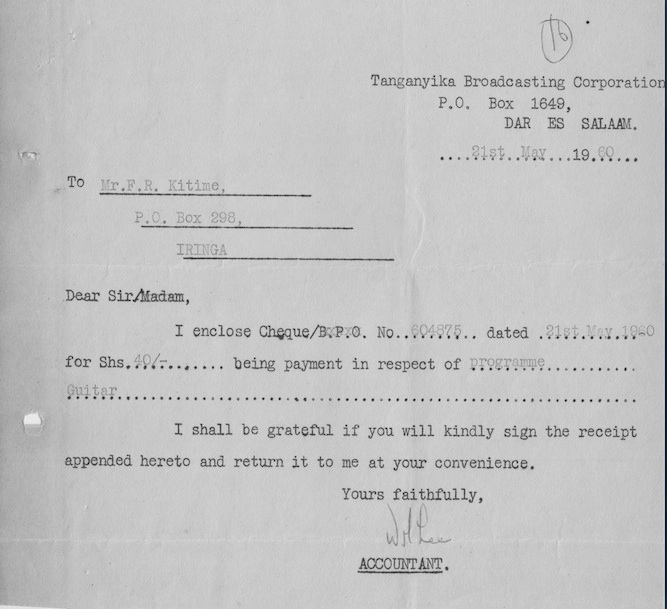
I am a native of Iringa. I was fortunate to be born into a household where music played a significant role in our lives. One of my parents’ greatest pleasures was music. My father had the ability to play several musical instruments, including the trumpet, saxophone, banjo, ukulele, and acoustic guitar. He recorded for the first time at the only radio station that existed at the time, Tanganyika Broadcasting Services (TBC), in 1960. Those songs were first played on a program called “Jimbo Letu” on May 16, 1960. My father was paid 40 shillings for his songs to be aired on the radio. At that time, you could buy a brand-new car for 800 shillings, so it’s clear that the rate paid by the radio was not small. This is evidence that before Independence, some musicians were paid royalties when their work was used on the radio.
From a very young age, my father encouraged my siblings and me to sing along as he played the guitar, and I fell in love with music from a very young age. And since we had a radio and a gramophone at home with records of various types of music—Swahili music, Indian music, English music, music from South Africa, and music from Congo—my ears began to hear and love different genres of music. I started school in the same year Tanganyika gained its Independence in 1961. I remember one day before Independence Day, we students swept the roads near our school and then sprinkled them with water so that on Independence Day, there would be no dust. There were no tarmac roads in our town.
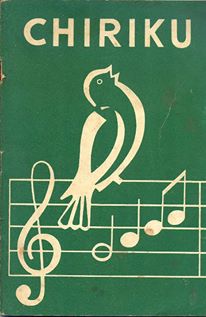
At school, there was a period called “Kuimba” (Singing). The teacher made sure to teach at least one song per week. Special books existed containing songs with life lessons—respecting parents, elders, loving school, and so on. This subject existed at all levels of school, and there were some teachers who even knew how to read and write music in notation, so students got musical education beyond just singing songs.
Every school had a ‘school band’. The school band would play music every morning during student inspection for cleanliness before classes. One of my dreams back then was to become a member of the school band. I longed to be either a drummer or a flute player, and above all, to be lucky enough to be the drum major. These bands played high-quality music. Teachers with musical expertise enabled these bands to achieve a high level of performance. Schools competed by dressing their bands in the best uniforms and ensuring meticulous playing. I remember the joy that existed when various schools met on a public holiday, where there would be parades, and then each school would march past the guest of honor, with its school band leading the parade. We tried hard to be clean, smart, and disciplined so that our school would win praise.
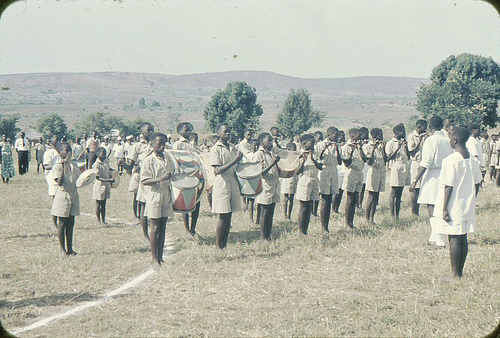
Every school had choir groups, traditional dance groups, and some even had modern music bands. I attended a school where most of the students were Indians, the Iringa Aga Khan Primary School. Regardless of tribe or nationality, we all participated in local traditional dances. Indeed, there were Indians who knew how to dance ‘sindimba’ better than the Waswahili. The Ujamaa policy was introduced when I was in seventh grade. Many things immediately changed. Many traditional songs were given political lyrics. Cultural officers were at the forefront of ensuring this, going around to mobilise and even punish groups seen as unwilling to sing political songs. Foreign bands, which used to compose and sing in their own languages, mostly Congolese bands, were forced to start composing and singing in Kiswahili. In schools, we began to sing political and patriotic songs more extensively. The singing lesson taught more political songs. Choirs from every corner of the country composed patriotic songs and were recorded by the National Radio, which by this time had been nationalised and was called Radio Tanzania Dar es Salaam (RTD).
At the end of every musical performance, bands were obliged to play that famous song praising the party, called “Chama Chetu Cha Mapinduzi Cha Jenga Nchi”.
The TANU Youth League (TYL), the then ruling party’s youth wing, had branches in every corner of the country, down to the village level, and these TYL branches greatly contributed to the development of music in the country, because every TYL branch had to have a music group, either a choir or a traditional dance group, and often both. Many districts had dance band instruments owned by the TANU Youth League. Many famous musicians of that era, whose songs are still popular today, emerged from or passed through these TYL bands. In Iringa, my hometown, the TYL band instruments eventually ended up being owned by the Mkwawa Secondary School dance band. The Band aptly named Orchestra Mkwawa, was a very good band that did record several songs at the RTD studios, under their *Ligija* style.
Public corporations and various government institutions were encouraged to have cultural groups, which included choirs, bands, and traditional dance groups. Many became famous nationwide, like the National Insurance Corporation (BIMA), groups from the Police Force, Prisons, Immigration, the People’s Defence Forces (Jeshi la Wananchi), TANCUT, UDA, URAFIKI, NUTA, and so on. Along with providing entertainment, these groups built patriotism among the youth of that time.
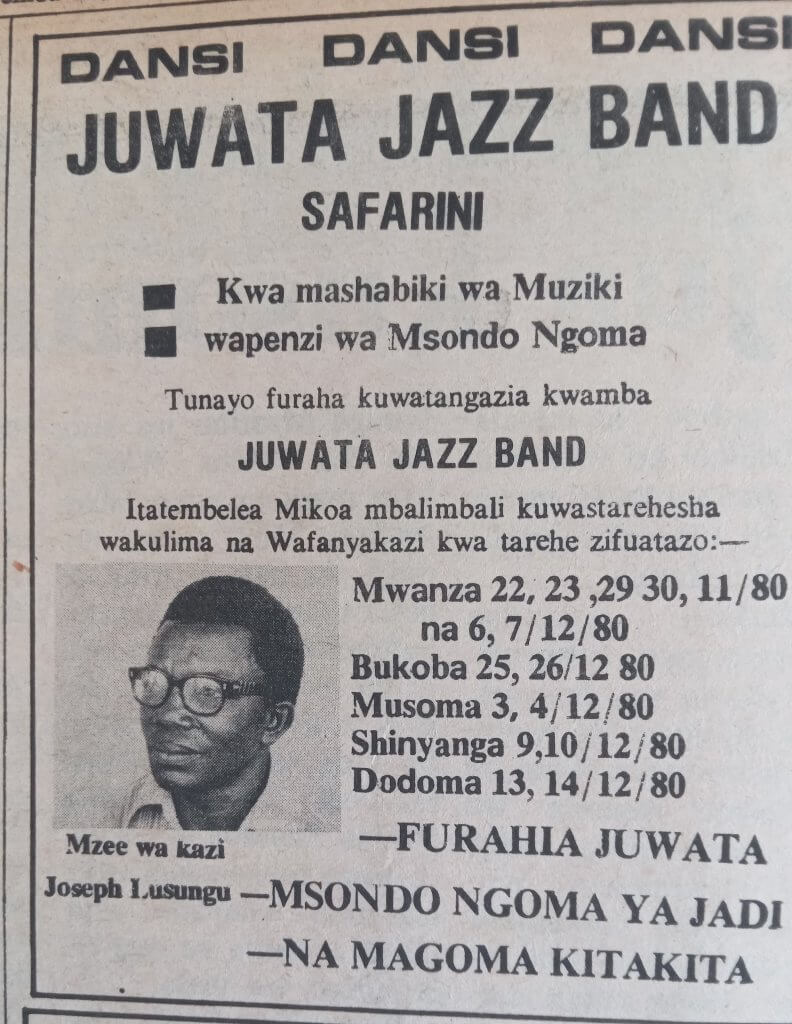
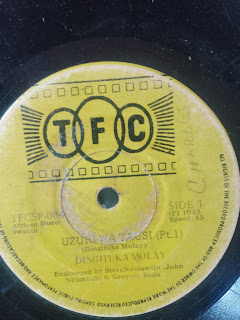
One major shortcoming that I must mention was the emphasis that these music groups were only for edutainment. The business fundamentals in the arts, in general, were not considered important. Despite having many musicians, there was only one music company, which was owned by the government (the Tanzania Film Company). It did release a number of records but it was very poor in promotion and distribution. Neighbouring countries like Kenya and even Zambia took on the role of doing business with Tanzanian music.