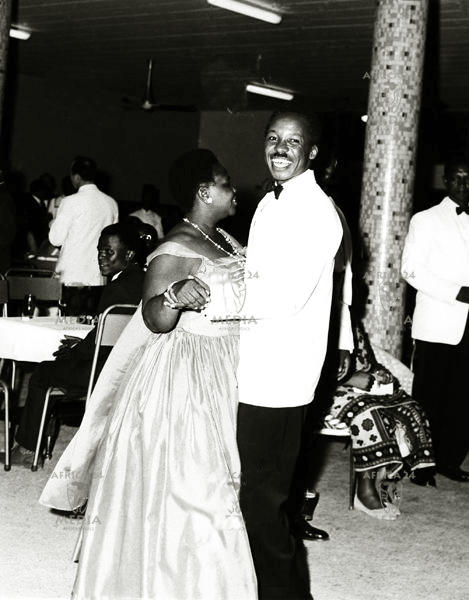
Tanzanian music, like that of many other African countries, has traversed many peaks and valleys, a common experience for all art forms. There is absolutely no doubt that politicians in our country have also made significant contributions to bringing our music to where it is today. I am sure there is a lesson for today’s politicians in how a common decree can create new history.
Let’s discuss the music of the 60s and 70s, in particular that music which did not have a rumba orientation, and see how a political decree touched it and the resulting consequences in the history of music and musicians in our country.
From the late 60s, through to the 80s, young musicians, in particular those who were in secondary schools, formed their own bands. Many of these bands played cover songs of famous musicians, such as The Beatles, The Temptations, The Famous Flames, The Jimi Hendrix Experience, and so on. Even the names of the groups were imitated from groups in the West. While rumba music groups gave themselves names that that ended with ‘Jazz Band’ or ‘Orchestra’, for example, Western Jazz Band, Kilwa Jazz Band, Orchestra Selesele, Orchestra Santa Fe, etc., these groups with a Western orientation had English names without the label of jazz band or orchestra, for example, The Sunburst, The Comets, The Rifters, The Jets, The Barkeys, The Barlocks, The Hot Fives, The Sparks, The Tonics, The Groovemakers, The LoveBugs, The Revolutions, and so on. Even bands that later crossed over and began playing rumba music still maintained the characteristic of not calling themselves Jazz bands or orchestras, such as The Safari Trippers, The Afro 70, or Alfa Afrika Group, etc.
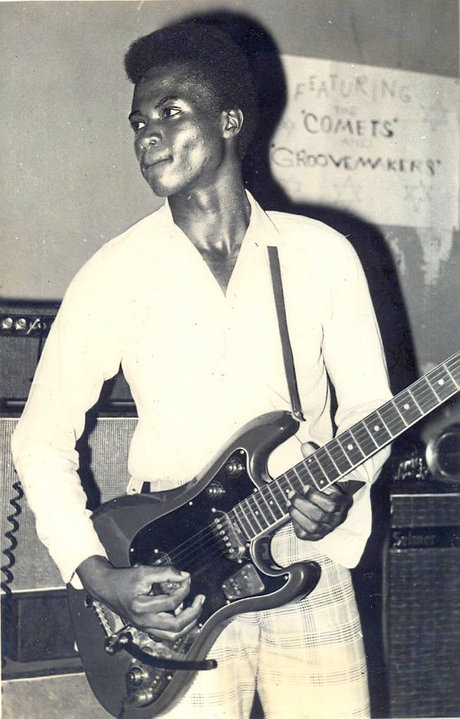
Most of these bands were based in Dar es Salaam, Tanga, and Arusha. When discussing this music, you cannot overlook the contribution of bands started by Goan youth. They, too, had bands in almost every town they were in. The Kilimanjaro, also known as Wananjenje, originally began as The Love Bugs, a band formed by Goan youths, residents of Tanga city. Other Goan led bands were The Barlocks and there was also George De Souza Band, The Demellos, and, of course, not forgetting the In Afrika Band, etc.
It is also important to mention the contribution of the American cultural center, then known as the United States Information Service (USIS), this center also greatly contributed to the direction of the music of the youth of that time. At that center, there were frequent movies showing American musicians; there were vinyl records of American musicians, which could be borrowed or listened to right there at the center. There were also magazines like Ebony, which showed the lives of black American artists and athletes. More importantly, the center brought musicians who at that time had a great reputation worldwide, and those musicians performed free shows at the Mnazi Mmoja grounds. Among the musicians I remember who performed in the country are guitarist Buddy Guy and his band, and the Staple Singers.
The Mnazi Mmoja grounds at that time were an entertainment venue for Dar es Salaam residents. A stage was built that was used almost every weekend for entertainment; within the Mnazi Mmoja grounds, there was a bar that was open every day; the grounds were an important meeting place for the youth in Dar es Salaam.
Due to the morals of that time, students, even those in secondary schools, were not supposed to be in dance clubs at night, so a system of music called Bugi was introduced. Bugi was a popular afternoon dances held mostly on Saturdays and Sundays and on public holidays.. Many schools allowed Bugi in school halls. Even denominational schools like Salvatorian School, which was run by catholic nuns, and which later became St. Joseph Primary School, allowed youth bands to play music on school premises on weekends.
I remember one day attending Bugi at St Joseph Primary school in 1973. On stage that day were The Comets. I still remember two songs played there, “Mammy Blue” by the band Pop Tops and “Alobe” by Negro Success. Admission was about thirty cents.

It was during the heyday of this music that a new type of music called Afro Rock emerged, a mixture of Rock music and African music. The band Osibisa, which had a mix of musicians from Ghana and Carribean countries, and Fela Anikulapo Kuti from Nigeria, were some of the musicians who managed to introduce this new music to Tanzanian musicians of the time.
Afro Rock was very broad, as musicians from every corner of Africa began using their indigenous music and mixing it with rock to create their own type of music. For example, Patrick Balisidya and Afro 70 came up with their mix of Gogo music and rock; The Jets had their one song of Zaramo and Rock, “Mulemuleme”; The Sparks came up with their Zaramo song “Nofa na Nzala”. This song, “Nofa na Nzala,” was revived after being re-recorded two weeks ago by a South African musician named Vulindlela Yeni. Vuli was one of the youth who fled their home and came to Tanzania due to the extreme apartheid politics in South Africa at that time.
Vuli, a saxophone player, ended up playing for a number of bands in Dar es Salaam. including Boma Liwanza, the Rifters, the Revolutions and the Safari Trippers; eventually, he became one of the musicians in Lucky Dube’s band, and he was the teacher of the famous saxophonist Akuliake Salee, known as King Maluu.
The Sunburst also had a number of Ki Swahili songs in the Afro Rock style; their songs like “Kosa langu nini”, “Simba anaunguruma”, etc., were popular and earned them the Best Band award in 1973.
Unfortunately, these bands that played music with a Western orientation were not famous for recording their songs, so only pictures and stories of them remain, but the few that did record left a significant lasting mark that is still respected. Among the bands that recorded many songs in the Afro Rock style at that time are Afro 70 and Sunburst. A few years ago, the Strut Records company re-released songs by the Sunburst band. Patrick Balisidya, during his lifetime, had re-recorded Afro 70 songs with the Swedish band Archimedes Badkar.
The sad thing is that while musicians across Africa were striving to get a chance to ‘break out’ and be on the world music map in those years, on November 12, 1969, a meeting was held between teachers and the Regional Commissioner of the Coast Region (Dar es Salaam was part of the Coast Region at that time). In that meeting, secondary school teachers complained that their students were being corrupted by ‘soul’ music. After that meeting, through the Standard newspaper, the Regional Commissioner issued an order banning that music in his region. The region that had the most active soul and Afro Rock music was rocked; the young musicians who could only perform in the afternoon were forever struck from the picture. I still wonder, if that decree had not been issued, what contribution would Tanzanian musicians have made in Afro Rock music?