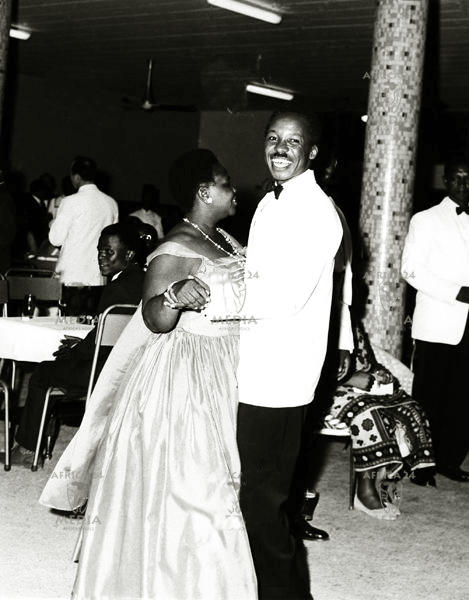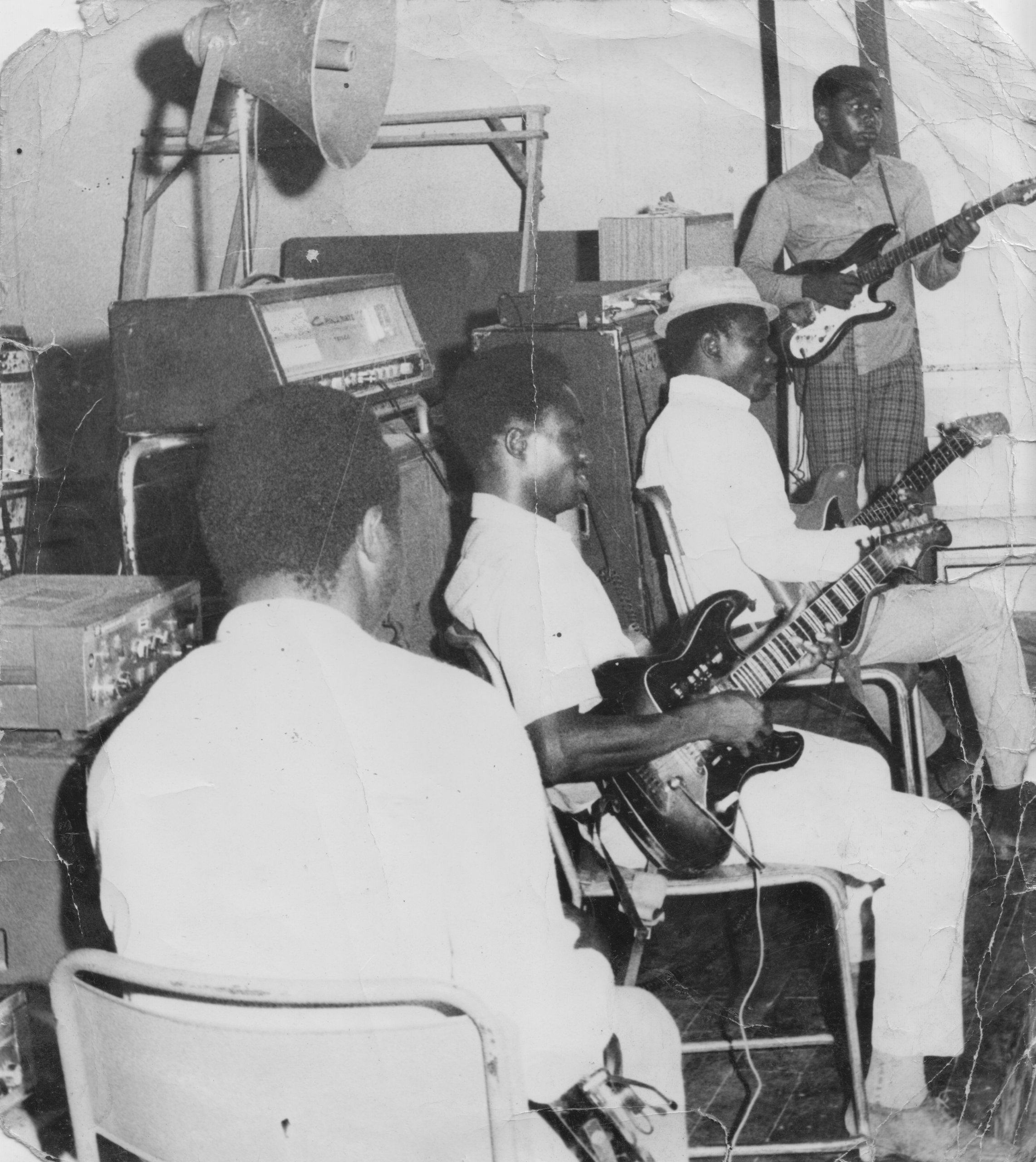
I want to start today by going through various regions where there were bands. Some bands were so famous that they gained recognition outside our country, while others were not very famous or didn’t last long. However, there are many artists who emerged from those small bands and later became famous nationally and even worldwide.
Let me start with Kigoma. This is not a city often mentioned in discussions about dance music, but several bands from that city made their mark. Let’s start with Lake Tanganyika Jazz Band, locals just call it Lake Jazz. This is the band where the soloist, composer, and singer Shem Karenga came from. Shem started his music career there playing bass guitar and eventually moved to the Tabora Jazz Band, where his star shone brightly as a lead guitarist. Let me touch on something here: many lead guitarists eventually became famous guitarists. Who doesn’t remember Joseph Mulenga, the bass player of Dar es Salaam International Orchestra, who later became the famous lead guitarist for Mlimani Park, Bima Lee, Legho Stars, and MK Group?
Kigoma also had a band called Super Kibisa Jazz Band. This band had great singers and excellent players. One of the guitarists of this band, Mzee Simba, eventually joined JKT Kimbunga, a band he stayed with until he retired. There was also a band that took the city’s name and was called the Kigoma Jazz Band. Another band that existed in Kigoma was called Kasababo Jazz Band. This was among the very first bands of the late Shaaban Dede.
The neighbouring region of Mara also had many bands. Of course, it’s good to start with Mara Jazz Band, which gained great popularity with its *Sensera* style. But there was also a band that took the name of the town of Musoma, a band called Musoma Jazz Band, which introduced itself with its *Segese* style. Another band from this region was the Special Baruti Band. This was the first band of the famous singer Jerry Nashon before he moved to Dar es Salaam city. Musoma had a band owned by the Catholic Church called Juja Jazz. Several bands across the country were under the Catholic Church; even in Iringa, there was another band owned by the Catholic Church called VICO Stars, short for Vijana Consolata Stars. These bands didn’t gain much fame because they only played in church areas or at church celebrations.
Another band from the Mara region was Eleven Stars Band, although it called itself that name, the band only had six musicians.
Entering the city of Mwanza, a city that prided itself on leisure in the sixties and seventies, due to diamonds, cotton, and the livestock trade, the residents themselves would boast saying “wealth above, wealth below,” meaning above the land they had cows and below the ground they had diamonds. Mwanza had several bands, including Kimbo Twist Band, which was passed through by some of the most skilled lead guitarists to have emerged in Tanzania, the late Rashid Hanzuruni and the late Kassim Mponda. Mwanza also had a band where the majority of musicians were from Congo, called Orchestra Super Veya. This band was very famous in the lake region, and it’s where the famous musician Mzee Zahir Ally Zollo passed through.
The town of Shinyanga had a famous band called Shinyanga Jazz Band. This band recorded several songs, but one of their songs is remembered by fans of dance music to this day, called “Tenda Wema Nenda Zako.” This song was composed by the late Zacharia Daniel Mabula, and because of that song, until his death, the composer was called Zacharia Tendawema or Mzee Tendawema. He also made his musical history by passing through many famous bands, including Western Jazz Band, JKT Kimulimuli, and TANCUT Almasi Orchestra, where he also composed many songs, but the song “Tenda wema nenda zako” was his signature until he passed away.
Tabora was a very vibrant city. First, it is one of the oldest towns in the country. Second, Tabora was a city with many young people because it had schools and colleges located there. There were old schools like Tabora Boys Secondary School and Tabora Girls Secondary School, also colleges like Tabora Secretarial College, Tabora Teachers College, and the old Railway Training School. So, Tabora was also very vibrant musically. There was the famous Tabora Jazz Band, and its sister band, Nyanyembe Jazz Band, and there was also the old band Kiko Kids. Many very famous musicians came from these bands, including Shem Karenga, Wema Abdallah, Kassim Kaluona, and Salum Zahoro, names that came to resonate across East and Central Africa.
In 1972, Mzee Moses Nnauye was appointed Regional Commissioner of Singida. Due to his love for music, it didn’t take long before he ensured Singida got a good band called Ujamaa Jazz Band, a band that played in a style they called *King’ita Ngoma*. Several musicians like Waziri Ally and Selemani Mwanyiro passed through this band. Let me remind you of something else: when Mzee Nnauye was the District Commissioner of Bagamoyo, he also started a band called Sabasaba Jazz Band; the style of that band was called *Kizibo*. Moses Nnauye first invited Mzee Nyange, who was the soloist of Cuban Marimba, to join the Sabasaba Jazz Band. When Nyange refused, Hamza Kalala, who was also a musician with Cuban Marimba, accepted the call and joined the Sabasaba Jazz Band. Mzee Nnauye is the one who discovered the late Capt. John Komba eventually persuaded him to join the military (JWTZ) and later be part of the Arts Group of the Army, eventually leading to the founding of the group Tanzania One Theatre (TOT).
Let’s go to Dodoma. The Central Railway Line passed through Dodoma, so it was an important station, and people from all over the country had to pass through Dodoma. For example, in the past, people from the Iringa and Mbeya regions who wanted to go to Dar es Salaam had to first get to Dodoma by bus and from there get train transport to Dar es Salaam.
This old city had many bands. The bands of that time emerged with skill, and eventually the names of those bands became known throughout the country and even abroad. Today, let’s remember a few of that city’s bands and memorable events that happened during the heyday of those bands.
In 1948, Britain divided the country into eight provinces, and Dodoma was in the province called Central Province, so several musicians started their band and called it Central Jazz Band. Their famous song was “Dada twende tukalime tukajenge nchi yetu” (Sister, let’s go farm and build our country).
Another band was called the Jolly Sextet Band. This band was started by a Kenyan who came to Dodoma as an employee of the East African Posts and Telecommunications Corporation (EAPTC). This Kenyan came with his musical instruments. Among the people who became famous from that band is the famous saxophonist Mnenge Ramadhani, who gained great fame when he was with the JUWATA Jazz band. A businessman, Mohamed Omar Badwel, who had a garage and a photo studio, bought instruments and started a band that came to be called Dodoma Jazz Band. This band had very good musicians and produced songs that became known nationwide. One of the first lead guitarists of this band was Hassan Mursali, originally from Malawi. Later, he moved to the NUTA Jazz Band, and his solo guitar is heard in the famous song “Dunia Njema.”
Before we leave the Dodoma region, let’s finish by mentioning another famous band that came from the Mpwapwa district called the Mpwapwa Jazz Band. This band managed to record several songs that gained national fame during its lifetime, including the song “Nilikuwa sina kazi” (I didn’t have a job).
From Dodoma, we enter the Iringa region and enter the town of Iringa, which started mainly as a German fort during their campaign to capture Chief Mkwawa, after destroying his fort at Kalenga. The German army, with few German officers, had many African soldiers from various parts of East and Central Africa. There were Nubian soldiers, Manyema soldiers, Zaramo soldiers, Nyamwezi soldiers, and several other tribes. These soldiers began living with their families in areas known as Miyomboni, near the main police station, which was precisely the headquarters of the German army.
The children and grandchildren of these soldiers identified themselves as the rightful natives of Iringa town. They called themselves Born Town. So they even had a football team called Boni, short for Born Town. And they also started a band called Boni Jazz Band, perhaps one of the earliest bands in this city. Just as Dodoma had a band called Sextet Jazz Band, Iringa had a band called Habanero Jazz Band. Sextet and Habanero were names of two bands from Cuba. In those days, bands here in the country were emulating music from Cuba, not Congo, so even the names of their bands were Spanish-inspired. The Iringa band that gained great fame was the Highland Stars Band. Guitarist Abel Balthazar is one of the famous players who passed through this band. The home of the famous Msondo Ngoma lead guitarist Ridhwani Abdul Pangamawe, is where the rehearsals for Highland Stars Band used to take place. Ridhwani’s father and mother both knew how to play guitars. It’s no surprise at all that the family produced a guitarist and a skilled keyboardist who still move the nation today. One of their famous songs was “Sitasita Mpenzi.” Since I come from Iringa town, I remember one thing that no longer exists today. In those days, there were no loudspeaker paper posters for announcements, so on the day a band wanted to play, the whole band would arrange itself behind a pickup truck, mount the instruments, and start driving through the streets playing music live. And right there, they would announce which venue they would be at and the relevant entrance fee.
Another band in Iringa town was Iringa Jazz Band. This was owned by the TANU Youth League branch. Many towns had TANU Youth League bands in the 60s and 70s.
Mkwawa High School, which was originally a school for ‘Europeans’ called St George and St Michael European School, came to have a very good student band called Orchestra Mkwawa. With their style, which they called *Ligija*, they provided entertainment every weekend at the Welfare Centre hall, in the format of the popular daytime dances known as Buggy. As students, they were not allowed to be in dance halls at night, so they could only play that music during the day. Also, in the same school, there was another band that played Western music called Midnight Movers. The late Eddy Hanspoppe, Deo Ishengoma, and Martin Mhando were among the musicians of this band. The instruments they used were the same ones used by the TANU Youth League band of Iringa.
The guitars of this band were eventually taken by a few young people, me being one of them, who started a band that came to be known as Chikwalachikwala. Chikwalachikwala later split, and a band called BOSE Ngoma was formed, a name derived from the type of speakers they had.
In 1986, Tancut Almasi Orchestra was born, another major band to ever come from Iringa. This band was owned by the workers of the diamond cutting factory, Diamond Cutting Company, which was there in Iringa. The names of famous musicians who passed through this band are many; among them were the twin brothers Kasaloo Kyanga and Kyanga Songa, Banza Tax, Mafumu Bilali, Kawelee Mutimwana, Shaban Yohana Wanted, Kabeya Badu, Kalala Mbwebwe, Dingituka Molay, Amani Ngenzi, John Kitime, and many others.
Another band that existed in Iringa town was Ruaha International Orchestra, owned by a businessman named Batista Mtandi. This band was under the leadership of the late singer Kalala Mbwebwe, who moved there after the breakup of his former band, the Tancut Almasi Orchestra (which I will discuss in detail in another article). Its song “Lutadila” is a great memory for fans of this band. Other bands that existed in Iringa were VICO Stars (Vijana Consolata Stars), owned by the Catholic Church, and Living Light Band, owned by the Living Light Hotel.
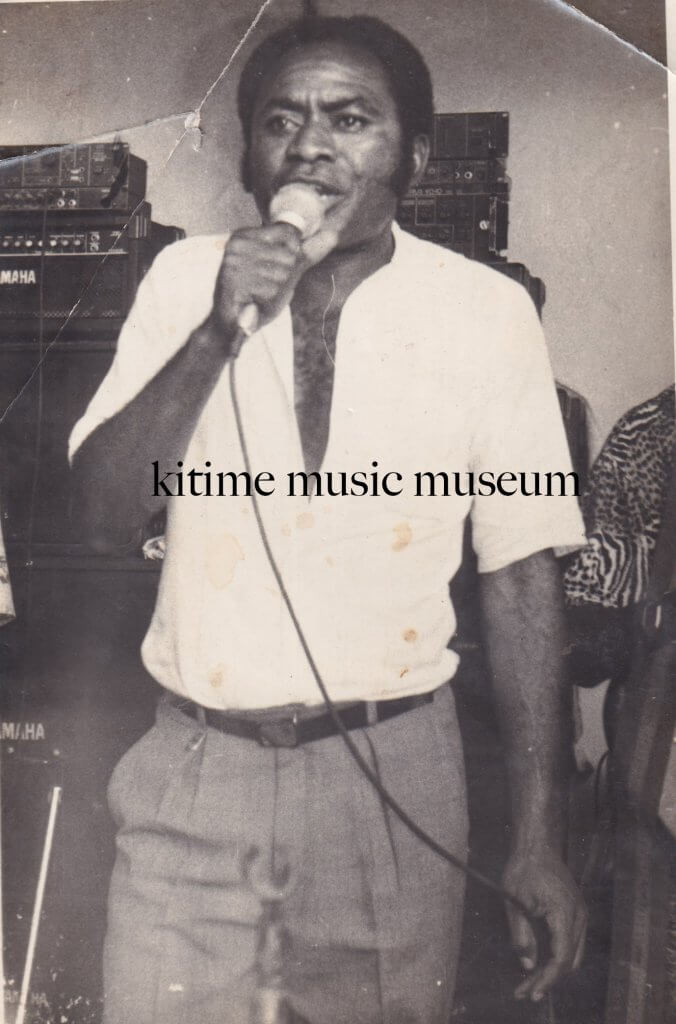
To finish this region without mentioning the famous JKT Mafinga band would not be right. This band was famously known as Kimulimuli. This name came from the disco lights that were turned on when this band played. The famous Ranger FBT type musical instruments used by many bands in the 80s came with disco lights (*kimulimuli*), and the residents of Mafinga would say in Kihehe, “Twibita kukina kimulimuli” meaning we are going to dance at Kimulimuli. And indeed, that name became the identity of that band, and even the band itself composed songs praising their name, Kimulimuli. Among the famous musicians who passed through this band are Zahiri Ally Zorro and Zakaria Daniel Mabula Tendawema, whom I’ve described how he got the name Tendawema… the journey continues.