

Tanga is one of the oldest cities in Tanzania, having served as the administrative capital during the German colonial period, when the country was known as German East Africa. The sisal farming industry, established during German rule, created many jobs and made Tanga a magnet for young people from every corner of our country and neighboring nations. Originally, sisal was called Katani, a name derived from the fact that the first sisal seeds to enter the country were smuggled in from the Yucatan region in Mexico.
The influx of young people greatly enlivened the city of Tanga for many years. After tasting the sweetness of life in Tanga, it was difficult for young people to return to their home villages. The city earned this reputation for captivating the youth.
Music from various genres of bands could be heard in Tanga, especially from the 1900s onwards. Musicians like Mzee Henry Mdimu already had a band called The Rhythm Makers in 1950; this band was later renamed The Sparrows. This band primarily performed in Asian and European clubs, which were based in an area popularly known then as Uzunguni (in the European quarters). As I mentioned earlier, there were young people from all corners of the country in Tanga city, and these youth formed their own unity associations. For example, the Nyamwezi and Sukuma people had an association called the Young Nyamwezi Sukuma Union, though they pronounced it more as ‘Yanga Nyamwezi’. In 1955, this association founded a band and called it the Young Nyamwezi Jazz Band.
Following the custom of those years, rumba bands would tour and play at various sisal estates. Within the Tanga district. I Tanga itself, there was a hall in the Ngamiani area where bands would take turns performing every weekend. Music was an essential part of life for Tanga’s youth at that time. The Nyamwezi Jazz Band had a regular gig playing for the workers of one estate in Mazinde. The instruments they used were rented and in poor condition. Sometime in 1960, the European owner of Mazinde estate bought these musicians new instruments, giving the band a new lease on life.
In 1966, Nyamwezi Jazz Band changed its name to Jamhuri Jazz Band. Although it was started on an ethnic basis, it evolved into a mixed youth band regardless of tribe or even nationality, as it also featured Harrison Siwale ‘Satchmo, a young rhythm guitarist, who was a Zambian.
Nyamwezi Jazz Band rented an entire house where the musicians lived. The famous lead guitarist John Kijiko got married in 1960 while he was a member of this band; the band financed the entire wedding celebration as Kijiko was the band leader. However, in 1963, John Kijiko crossed over to the Atomic Jazz Band, a rival band.
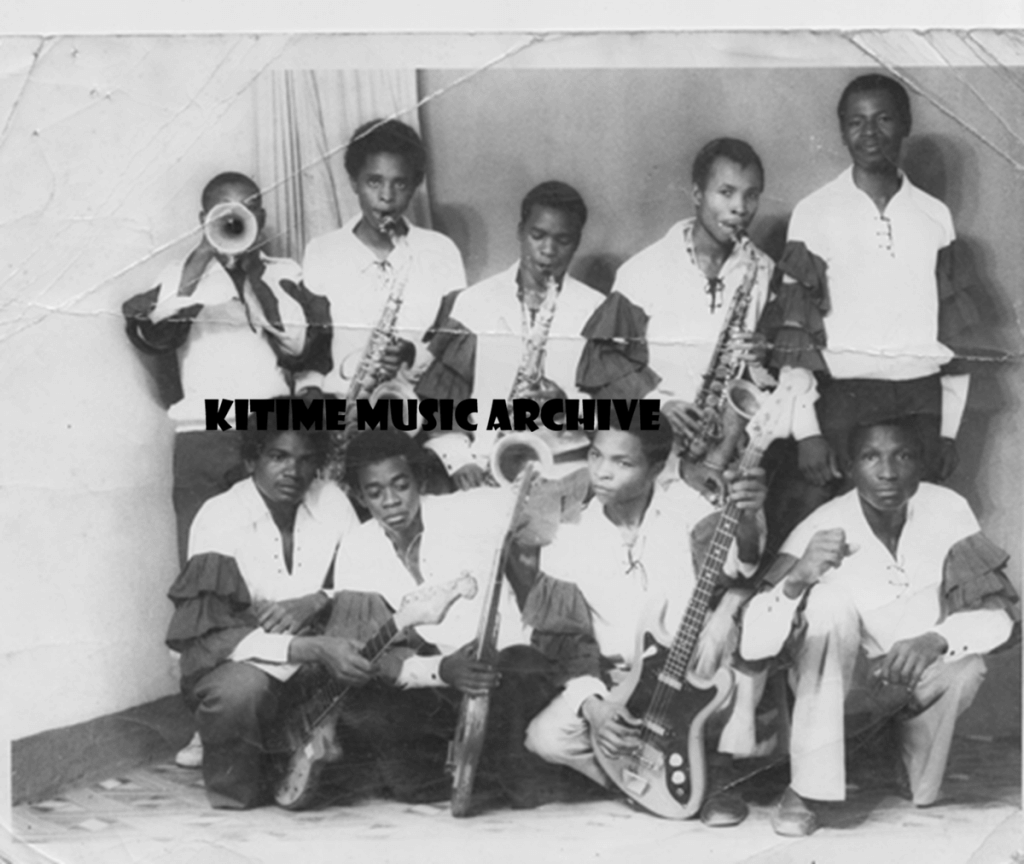
Atomic Jazz Band, which also started in the 1950s, was founded by a mixed group of local Tanga musicians, unlike the ethnic-based founding of Nyamwezi Jazz Band. Like other bands of that era, it was also run as a club, so it had both musician and non-musician members who paid a monthly subscription fee and could attend the band’s shows without paying an entrance fee.
John Kijiko’s move sparked intense rivalry between these bands, leading them to compose songs with sharp, competitive lyrics—songs with vijembe (barbs). Songs like ‘Ewe Mwana Usipayuke and Wanyama Wakali‘ (Hey Child, do not shout and Fierce Animals) by Jamhuri Jazz Band and ‘Aibu Waliopata Wenzetu Jumamosi‘ (The Shame Our Friends Got that Saturday) by Atomic Jazz Band are among songs composed as competitive jabs. This rivalry made these bands popular with fans across all of East Africa, and Tanga in particular.
A few members of Jamhuri Jazz Band broke away in the early 70s and moved to Arusha, where they formed the Arusha Jazz Band, which later went to Mombasa and became Wanyika Jazz Band, finally becoming the famous Nairobi-based Simba wa nyika Band.
Tanga had a large Goan community, and as early as the 50s, the Goans had established their bands. Mzee Henry Mdimu, who is mentioned earlier, started his music in a Goan led band.
The famous Kilimanjaro Band, also known as Wananjenje, is one of the offshoots of a Goan owned band called Love Bugs. The late Mabruk Khamis, famously known as Babu Njenje started his music carreer as a drummer in this band, and the Kilimanjaro Band’s lead guitarist the late Mohamed Mrisho, was also a member of this band. Eventually, the group changed its name to The Revolutions. In 1997, the group temporarily moved to London, and it seemed prudent to adopt a more Tanzanian name and so it changed its name to The Kilimanjaro Band.
You cannot discuss the city of Tanga without touching on its contribution to Taarab music. Tanga gave birth to a new style of Taarab. Indeed, modern Taarab essentially originated in Tanga, as they introduced electric guitars, accordion, and the rhythm of Tanga Taarab was upbeat and more danceable.
The rivalry between the famous Taarab groups, The Lucky Star and The Black Star, helped bring great fame to this style of Taarab. There are records indicating that the guitar playing in Tanga’s Taarab was introduced by a Congolese guitarist, thus giving Tanga’s Taarab music a completely new brand of flavour.



Great history.