
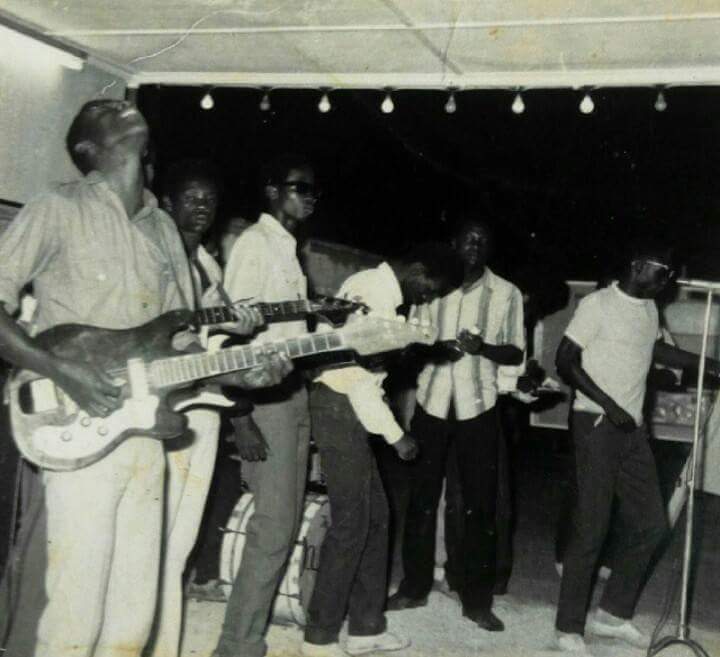
Having been a musician in Tanzania for over 50 years, I have witnessed numerous significant events in Tanzania’s history that have profoundly altered the direction of rhumba music.
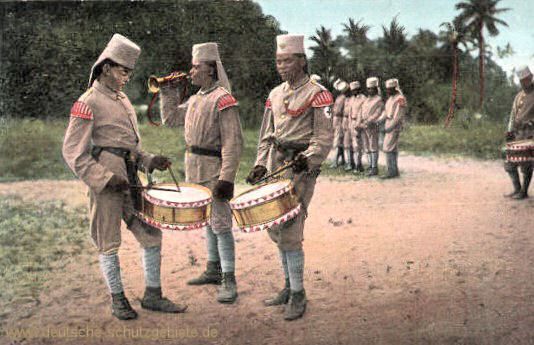
The story begins with the arrival of the Germans. The Germans entered this country first as ‘traders’ under the name German East Africa Company. Not long after they established the first government in the second half of the 19th century, and called their new colony German East Africa, and to protect the new government, an army was established. It was then that the Germans brought the first foreign musical instruments. The instruments were for use in their military bands. Instruments like saxophones and trumpets, and drums which were manufactured in their homeland. Military band music introduces the foreign music which, which spurred the introduction of the first urban music.
Tanzania has always had many tribes, and each tribe had its own ‘ngomas’. I hesitate to call it the just traditional music because the ngoma is much more complex. The word ‘ngoma’ itself meant a number of different things. The instruments used are called Ngoma, drums in English, but the occasion where Ngoma is performed is called ngomani. For different types of occasions, there were different names of the ‘music’ performed. There would be a name for ngomas performed after a good harvest, a different name for ngoma performed at funerals, and the same for initiation Ngoma or for any other occasion. When the Germans came, they had just one word for all their music events, they called it muzik. It was soon adopted, and since then the Kiswahili word for music is muziki.
After the locals saw the type of music being played by the German soldiers, they imitated it and started a new type of music which they called ‘Beni Ngoma’ . Instead of saxophones and trumpets, traditional blowing instruments were invented, and a new music was born. This music became very popular among the urban youth of that time and greatly helped to start spreading Kiswahili in our country. Beni Ngoma was the translation of the local youths’ then to the German army brass band music.
The end of the First World War, brought the end of German rule and the country, which until then was known as German East Africa, was handed over to the British. The British did not take kindly to Beni Ngoma, whom they saw the music a sort of mockery to the British army, and did made efforts to ban the music. But it has survived in some tribes and has become one of their ngoma. For example, the Wanyakyusa with the Malipenenga, and the Wamanda with Mganda.
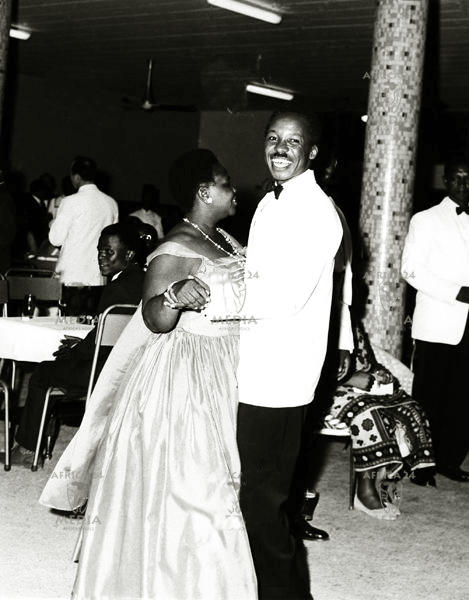
At the same time, the British introduced the culture of having clubs, where ‘civilised Africans’ started dancing clubs. Memorable dancing clubs were Novelty Dancing Club and New Generation Dancing Club. The clubs even held competitions, dancing music, mostly Western music played on the gramophone. Soon, these clubs started music groups performing the kind of music they heard on the gramophone. This new music was another nail in the coffin for Beni Ngoma’s popularity.
Among the first documented big music groups during the British era in the late 20s were the Dar es Salaam based groups, YMCA Social Orchestra and the Dar es Salaam Social Orchestra. The latter is said to have given birth to the famous Dar es Salaam Jazz Band, which saw its demise in the mid-70s.
In the late 40s, the first recording company was established in Nairobi, Kenya. Musicians who wanted to release a record, from the whole of East Africa, flocked to Nairobi. Including Adam Salim, who is believed to have composed the famous song Malaika. But that’s a story for another day. Super Stars were born, great names from Tanzania included Frank na Dada zake, Dr Hosea Macha, Salum Abdallah of Cuban Marimba Band and on and on. And for many years, Kenya became a very important hub of East and Central African music.
After the Independence of Tanganyika, almost every major town had at least one or more band. Many bands were owned by TANU Youth League, the youth wing of the then ruling political Party. The bands played various types of music; some played music based on the tribe where the band existed, while many other bands played music by imitating music from Cuba,the rumba, chacha, bolero, and so on, music which became popular since the introduction of the GV series 78s in the early 30s. But there were also many groups that played music by imitating music from Western countries, with names like. Tanganyika got its independence in 1961, and about that time when the Congolese fleeing from their country started making Tanganyika their home. Musicians from there settled in some major towns, like Dar es Salaam, Mwanza and Moshi, and began influencing and actually changing the rhumba music scenery in the country. Local musicians who played music in their club groups as a hobby saw the arriving Congolese actually make a living from just music. Groups began changing to copy the Congolese groups. They copied their music, the way of life, and some musicians went to the extreme of changing their names to sound ‘Congolese’.
A former minister of culture called Dar es Salaam’s top musicians and urged them to stop copying the Congolese and find their own way. The bands heeded and thus began ‘the Golden age’ of Tanzania Rumba music.
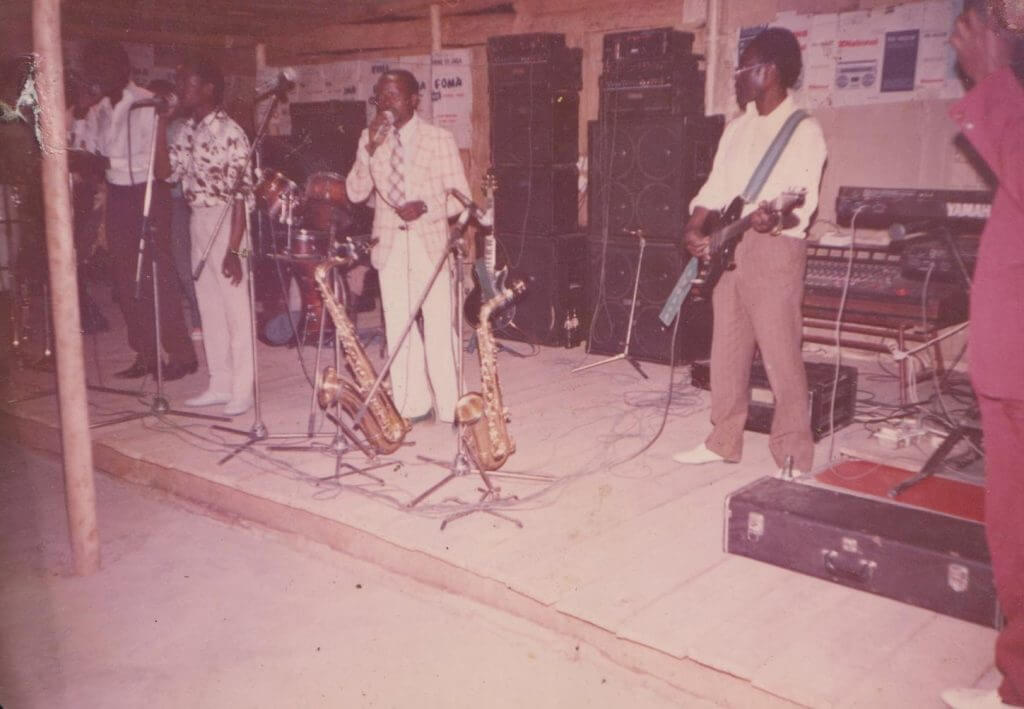
Several years after Independence, Tanzania began following the Ujamaa Policy (African Socialism). Public corporations and government institutions were encouraged to have culture groups; many bands were established throughout the country, and the work done by those bands is still highly respected to date.
In the late 80s, we, musicians, began to hear about a disease that would afflict a person; they would weaken and then die. This disease was given many names, including Juliana, Ngoma, and Udude. In my own home town Iringa, for example, the disease was known as Lugandaganda, meaning ‘the one that makes you waste away’, and Uwamuledio, meaning ‘the radio disease’ because radios talked about the disease a lot.
Despite the terrifying information about this disease, we musicians did not change our ways; we were famous and thus able to have many lovers. The music business system of that era forced music groups to travel around every corner of the country, and during these tours, the culture of having many lovers continued. I remember on one trip when I was with Vijana Jazz Band, we had a tour around the Kagera region. As soon as we disembarked from the ship in Bukoba, even before getting our lodgings, we were taken to the District Commissioner, the late Mr Pius Mlowe, who warned us of the disease and advised us to check our sexual habits. This was a clear enough sign of how bad the situation was.
The disease took many great musicians to an early grave. HIV/AIDS has created a large gap between the excellent musicians of the past and the excellent musicians of today. It is like the present rumba musicians are groping about, trying to find what rumba is. There was a time when you could safely say, there is Tanzanian Rhumba when we had bands like Tabora Jazz Band, Jamhuri Jazz band, Cuban Marimba Band, Western Jazz Band, Urafiki Jazz Band and ohh so many other bands.



This is a Master Document on the history of our Nation’s Music Field. If you have time please Make it a phD Thesis with the Open University of Tanzania/Any University.l
This Document can be a phD Thesis with the Open University of Tanzania/Any University.
Thank you Sir