
One day in 1966, I don’t remember the exact date, my father announced that he would be travelling with me to Dar es Salaam. We were then living in Iringa, about 500 kilometers from Dar es Salaam. My father was a sales manager for the CALTEX oil company, the company had provided him a car, a green Hillman Minx.
A few days later we left Iringa at dawn, it was going to be a long journey and most of the road to Dar es Salaam was rough and dusty except for very few kilometers stretching outside Iringa and a few kilometers passing through Morogoro town.
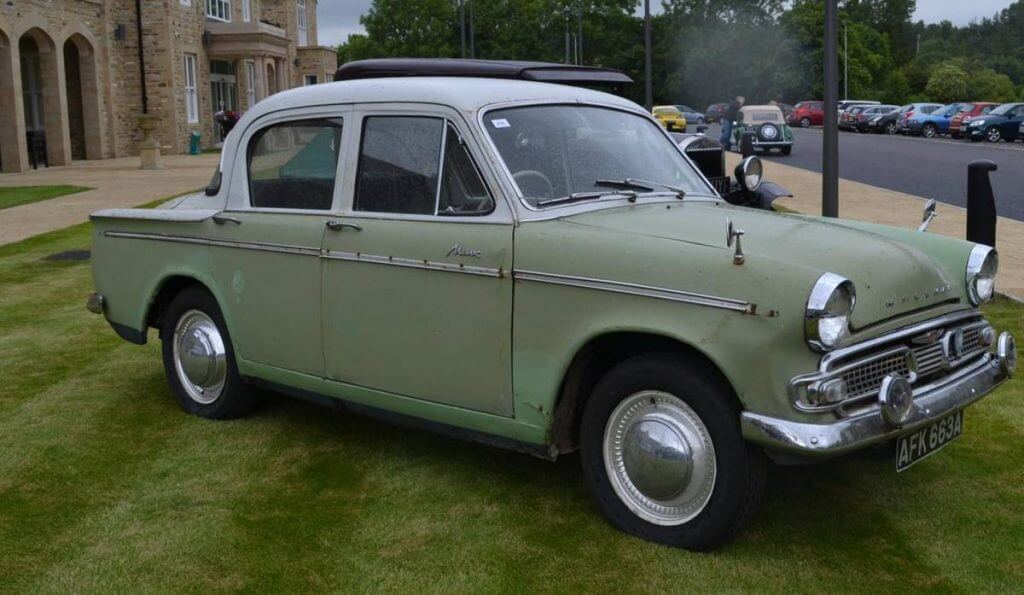
It was late in evening when we arrived at the outskirts of Dar es Salaam, we were on a tarmac road again, we had arrived at a suburb called Kimara, in the outskirts of Dar es Salaam. We stopped for a few minutes and dusted ourselves, we were very dusty.
We checked in at a hotel then known as the Rex Hotel, it was very near the Clock Tower roundabout, where Samora Avenue ends today. Two big things happened for me that day: first, this was my first time in Dar es Salaam, and second, at the Rex Hotel we got a room upstairs, I think it was the first floor; it was the first time in my life sleeping in a room upstairs. I guess I managed to fall asleep because I was just too tired, but I woke up at dawn and went to the balcony to watch Dar es Salaam waking up. I remember watch cars pass and people by on the road below, just enjoying that feeling of being upstairs. Everything was new, the noise the number of people the cars, I had never seen so many cars at such a short time. Cars of different sizes and colours, so many people going this way and that way, I was mesmerized until my father called to have a bath so we could have our breakfast.
After breakfast my father went about his work, I was told to strictly stay in the room until he came back, so I spent my time watching everything from the balcony.
That evening after super, my father explained why he had brought me to Dar es Salaam,
“The African Fiesta Band from Congo was in Tanzania and that night they were performing at the Arnatougro Hall, not far from the here. I am going to take you there to hear them”. That again was another first, in Iringa my parents used to go dancing but I had never been invited. But now my father had driven 500 kilometers so I could hear a band playing. Around nine that evening, we left by car and headed to Arnatougro Hall where the band was performing, I found out much later that it was actually just a walking distance from the Rex Hotel.
Because I was underage, I wasn’t allowed to enter the dance hall, and my father knew that, so he parked his car outside the hall, and we could clearly hear the music from there. That’s how I first heard the African Fiesta Band under the direction of the guitar wizard Dr. Nico Kasanda from Mikalay.
One of the songs performed that day, has forever become one of my favourite songs, I later learned it was titled Hommage à Lumumba meaning Tribute to Lumumba, the song had Kiswahili lyrics, some of the lyrics were:
Bwana Lumumba usisahau nchi yako ya Kongo
Afrika mzima wanalia Lumumba Patrice,
President Nyerere analia, Lumumba Patrice,
President Mobutu analia, Lumumba Patrice……
And the singer went on to mention all the African heads of state of that time. It was a gentle rumba song accompanied by Dr. Nico’s sweet solo lead guitar. From that day I have had a great love for African Fiesta and especially for Dr. Nico’s solo playing.
Nicholaus Kasanda known to his fans as Dr Nico, because of his fantastic guitar playing, was born on July 7, 1939, in the Mikalay region of the Democratic Republic of Congo, then called the Belgian Congo. He studied and eventually qualified as a technical teacher. Dr Nico left his teaching career to join music and indeed emerged as one of the best solo guitarists ever to come from Congo and Africa as a whole. Nico started playing music while still young and in school; in 1953, at only 14 years old, he joined the famous band African Jazz under the veteran Joseph Kabasele who is also respected as the Father of the Congolese Rhumba. From a young age, his excellence on the guitar was evident, leading fans to nickname him Nico Mobali, Man the man. Later, he was given the name Dr. Nico, which remains with him to this day in the minds of those who loved his music.
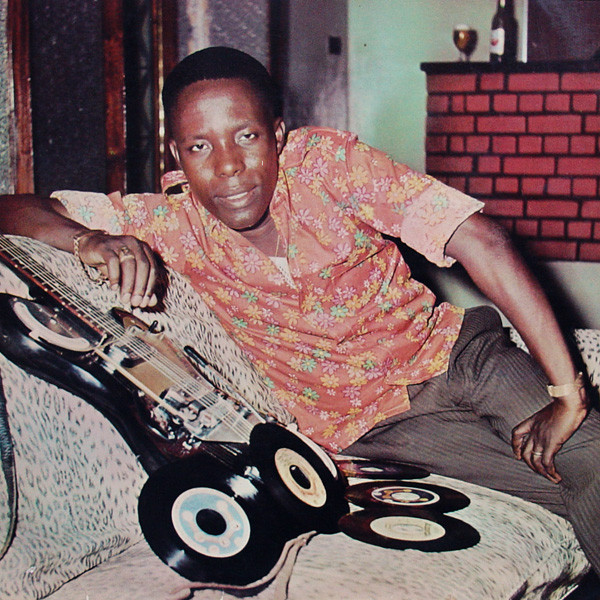
In 1960, when Congo was in the final stages of the independence movement, the band African Jazz released the hit Independence Cha Cha, with Dr. Nico on solo guitar while his brother Dechaud played rhythm guitar. That joyful song almost became Congo’s national independence anthem.
When Dr. Nico joined African Jazz in 1953, the band had other musicians who would go on to make significant contributions to the recognition of Congolese music. Among them were Isaac Musekiwa, a renowned saxophonist from Southern Rhodesia (now Zimbabwe); Roger Izedi; Balonji Tino Baroza; Charles Mwamba Dechaud (Nico’s brother); Tabu Ley Rochereau; and Joseph Mulamba Mujos, names that would dominate Congolese music in the ’60s and ’70s. This is what led the leader of African Jazz, Joseph Kabasele, to be honored as the Father of Congolese Music. These big names inspired many musicians of that era in Tanzania to adopt similar names; there were Tanzanian musicians who were known as Mujos, Baroza, Izedi, and so on.
In 1963, a large group of African Jazz musicians broke away from Joseph Kabasele and formed their own band, African Fiesta Orchestra. With Dr. Nico on solo and Tabu Ley leading vocals, they set all of Africa ablaze.
On November 16, 1965, a major split occurred: African Fiesta divided into two groups, African Fiesta Sukisa under Dr. Nico and African Fiesta National under Tabu Ley. Dr. Nico remained with his brother Charles Mwamba “Dechaud,” Pierre Bazeta André, Lumingu “Zoro,” Victor Kasanda “Vixon,” Joseph Mingiedi “Jeff,” Pedro “Cailloux,” and Josky Kiambukuta. It was with this group that Dr. Nico toured Tanzania in 1966 and performed in Dar es Salaam at Arnatougro Hall, where, as I mentioned, I was lucky enough to hear them live. The band also performed in Morogoro. The Morogoro show did not end well, the band decided to end the show earlier than advertised, some of the musicians had managed to get girlfriends and wanted to end the show and get back to their hotel for an evening of fun, it did not end well.
The Regional Commissioner who was at the dance intervened and forced the band to continue playing up to the time that was advertised, or else he would lock them up. The famous lawyer Said El Maamry, who was the time the Regional Police Commander of Morogoro Region was also present, he ordered that after the show the band be escorted out of Morogoro region, just to make sure the musicians didn’t even spend the night in Morogoro.
During that tour, African Fiesta Sukisa also recorded several songs at Radio Tanzania Dar es Salaam studios, including the song TANU Yajenga Nchi and Hommage à Lumumba.
African Fiesta is also credited as the first band to introduce the style of playing “second solo” guitar, and Dr. Nico’s brother, Charles Mwamba ‘Dechaud’, is especially credited as the first to develop the technique of second solo in rumba. The band is also mentioned for popularizing the Mutwashi style, which originated from the dance of the Wakasai tribe, Dr. Nico’s own tribe. The band was also known for the famous Kirikiri style; the Kirikiri dance was influenced by soul music, where the head would sway in coordination with foot movements.
Nicholaus Kasanda from Mikalay passed away on September 22, 1985.
Rest in peace, Nicholaus Kasanda of Mikalay.



Sir, Another point of order! Dr. NICO and African Fiesta Sukisa came to TZ in 1968. I checked with three other eye witnesses who were there at Western Jazz Club house at Mafia Str, so there is no mistake about the year. After Fiesta had performed two songs, Dr. Nico himself said he was going to play a song about Lumumba. He sang in Swahili( although he had extremely fantastic singers – Sangana, Chantal etc)and later recorded at Radio Tanzania engineered by Elli Mboto. There are still a few of us(in TZ) who witnessed this event live! By the way the hall at Anatouglo was called Kibarua Bar. The main hall for Western Jazz, Dar Jazz played at Limpopo, Kilwa Jazz at Jangwani and Nuta Jazz at Amana, Ilala.
The Writer of this article is right that Dr. Nicolaus Kasanda wa Mikalalay and the Orchestra African Fiesta Sukisa visited Tanzania for the first time in 1966. In that year I was in standard six (6) at Boza Middle School, in Pangani Native Authority. We had a young teacher Leonard Gumbo, who made his Radio available to the pupils to listen. Did Dr. Nico made another visit in 1968 when I was in form 1 at Magamba Secondary School, Lushoto? I doubt it. As a big of him I should have known it. However anything is possible.